Open educational resources, usually shortened to OER, are teaching and learning materials that carry open licenses letting anyone legally use, adapt, and redistribute them at little or no cost. The concept received major federal backing in 2015 when the U.S. Department of Education launched its #GoOpen campaign and proposed a regulation defining OER licensing, and since then open textbooks and full curricula have entered thousands of districts. Used well, OER saves money and lets teachers adapt materials to their students; used carelessly, it imports unreviewed content of uneven quality. The difference is an evaluation process, which this guide describes.
What exactly makes a resource open?
Openness is a legal property, not a price. A resource is open when its license — most commonly a Creative Commons license — grants the rights to retain, reuse, revise, remix, and redistribute the material, a framework often called the five R activities. Material that is merely free to view, like most publisher websites, is not open, because teachers may not legally modify or share it. The distinction matters for curriculum planning: only genuinely open materials let a district align a unit to local standards, translate it, or update data examples without negotiating rights with a publisher.
Where did OER come from?
The term emerged from UNESCO-hosted meetings in 2002, and the movement grew through university open-courseware projects before reaching K-12 in force. The federal #GoOpen initiative, launched by the Department of Education in 2015, recruited districts to replace at least one commercial textbook with OER and spurred state repositories. Reviews of early state programs, including Utah's and Washington's open courseware projects, found meaningful per-student savings, and university studies of open textbooks — a research base that grew large enough for meta-analyses by the late 2010s — generally found student learning outcomes comparable to commercial texts. Comparable, not superior: the honest pitch for OER is savings plus adaptability, with quality depending on the specific material.
What kinds of OER exist for K-12 districts?
| Type | Examples of the form | Typical district use |
|---|---|---|
| Full curricula | Complete subject courses with lessons and assessments | Core adoption in math, science, social studies |
| Open textbooks | Single-volume subject texts | Secondary courses, credit recovery |
| Lesson and unit collections | Shared repositories of teacher materials | Supplementation and differentiation |
| Media and primary sources | Library and archive collections | Projects, inquiry tasks |
How should a district evaluate OER quality?
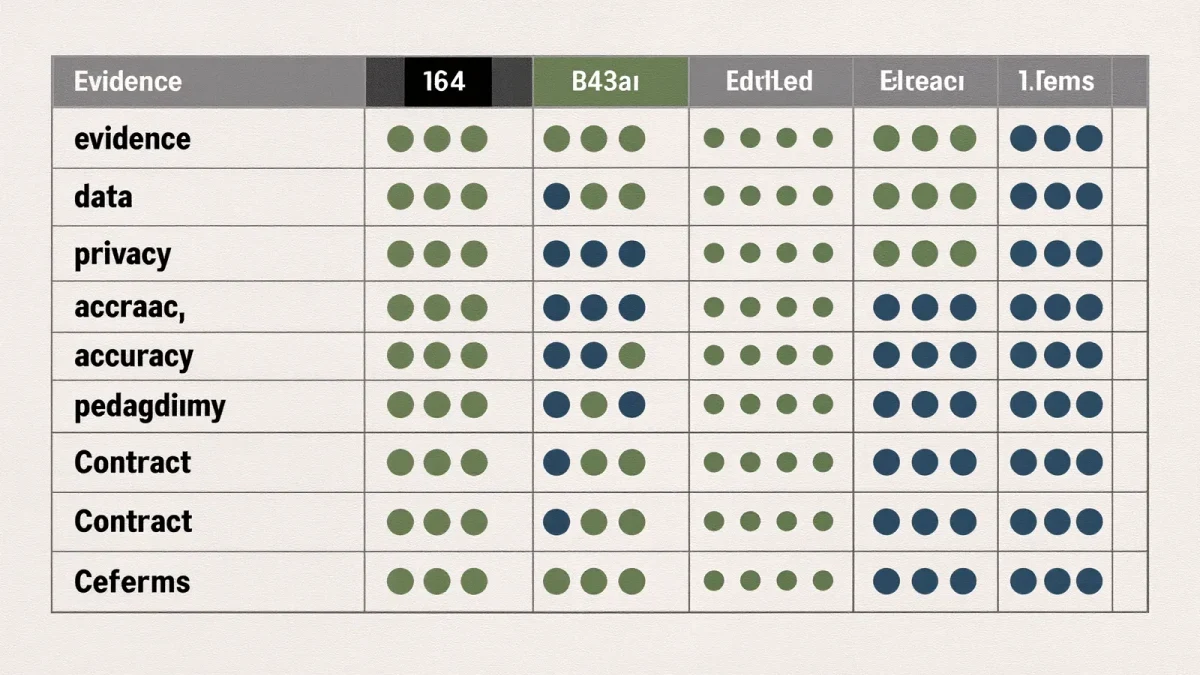
- Check the license first, and confirm it actually permits the intended use and adaptation.
- Review alignment to state standards using a published rubric, not a vendor's claim.
- Assess instructional design — coherence, scaffolding, assessment quality — with the same instrument used for commercial curricula.
- Verify accessibility: alternative text, captions, navigable digital files.
- Review for accuracy, currency, and cultural representation, ideally by a committee including teachers.
- Estimate the real total cost, including printing, devices, and the staff time to maintain and update the material.
What evaluation tools already exist?
Districts need not invent rubrics. Achieve, a nonprofit that operated through 2019, published widely used OER rubrics covering degree of alignment, quality of explanation, utility of materials, and assessment quality, and those instruments remain standard references. Review repositories such as OER Commons apply quality and alignment layers to indexed materials. State education agencies in states including Utah, Washington, and Louisiana have run structured OER review and curation programs whose materials districts can borrow. The professional move is to reuse these instruments rather than improvise, because commercial publishers are evaluated with structured rubrics and open materials deserve the identical discipline.
What does OER actually cost?
Free to license is not free to run. Districts adopting open curricula report real costs in printing and binding for schools that want paper, device and bandwidth infrastructure, and — most significant — the human time to review, adapt, and periodically refresh the material, since no publisher's update cycle keeps it current automatically. The honest accounting usually still favors OER strongly over commercial textbook cycles for core materials, but the savings arrive as a budget reallocation rather than zero cost. Districts that plan the maintenance role, often a curriculum specialist owning version updates, sustain adoptions; districts that do not watch the material quietly age.
How does a district start with a first adoption?
Veteran OER districts recommend starting with one course or grade level rather than a districtwide swap. Choose a subject where commercial materials are weakest or most expensive, form a review committee of teachers who actually teach the course, apply a published rubric to two or three candidate resources, and pilot the winner for a year with the printed-versus-digital decision made explicit. Board adoption formalizes the change and unlocks the maintenance budget line. Districts that follow this sequence accumulate local expertise and adapted materials with each cycle, which compounds both the savings and the quality in a way one-shot purchases never do.
What are the common pitfalls?
Four recur. Adopting unreviewed collections because they are free, which is how quality problems enter. Assuming digital-only access works for every student, which collides with home connectivity gaps. Ignoring the license terms — some open licenses restrict commercial use or require share-alike licensing of derivatives, which affects how a district may publish its modifications. And treating OER as a teacher-by-teacher informal practice rather than a curriculum decision with board adoption, professional development, and a maintenance plan. None of these are arguments against OER; they are arguments for treating openness with the same seriousness as any adoption.
What role do OER repositories play?
Repositories such as OER Commons aggregate materials from many creators and add the metadata — subject, level, license, reviews — that makes searching feasible at all. Some states run their own repositories aligned to state standards, which reduces the alignment review burden for their districts. The evaluation discipline still belongs to the district, since repository inclusion indicates discoverability rather than quality. A practical workflow for curriculum teams is to search repositories first for candidate units, apply the rubric to the shortlist, and document decisions so the next review cycle starts from institutional memory instead of a blank page.
How does OER interact with the commercial market?
The relationship has become less adversarial than early advocates predicted. Some publishers now offer openly licensed versions of core curricula, and hybrid models — open core materials with paid platforms, professional development, and printing — have become common procurement options. That structure gives districts a defensible middle path: the content stays adaptable and low-cost, while the services districts genuinely struggle to self-provide are purchased. The evaluation discipline remains the same either way: judge the content on evidence, judge the services on price and quality, and keep the license terms in writing so future adaptations stay legal.