An Individualized Education Program, or IEP, is the written plan that entitles a child with a qualifying disability to special education services in public school, and roughly 7.5 million U.S. students have one under the federal Individuals with Disabilities Education Act. The process follows federal rules, but timelines and evaluation details vary by state. Parents have defined rights at every stage, and knowing the sequence makes those rights easier to use.
What is an IEP, and who qualifies for one?
The Individuals with Disabilities Education Act, called IDEA, covers students in 13 disability categories, ranging from specific learning disabilities to autism, speech impairment, and emotional disturbance. A diagnosis alone does not qualify a child. Two conditions must hold: the disability must adversely affect educational performance, and the child must need specially designed instruction as a result. A student who has a diagnosis but learns fine without specialized instruction may instead get a 504 plan, which provides accommodations but not special education instruction.
How does the process start?
It usually starts one of two ways. Either a parent asks the school in writing for an evaluation, or the school raises a concern and asks for consent. A written request is worth the small effort: it starts a legal clock. Under IDEA, the school has 60 days from consent to complete the evaluation, though some states set shorter windows. The evaluation is free, and it looks at academics, cognitive functioning, speech, and any other area the team suspects is affected.
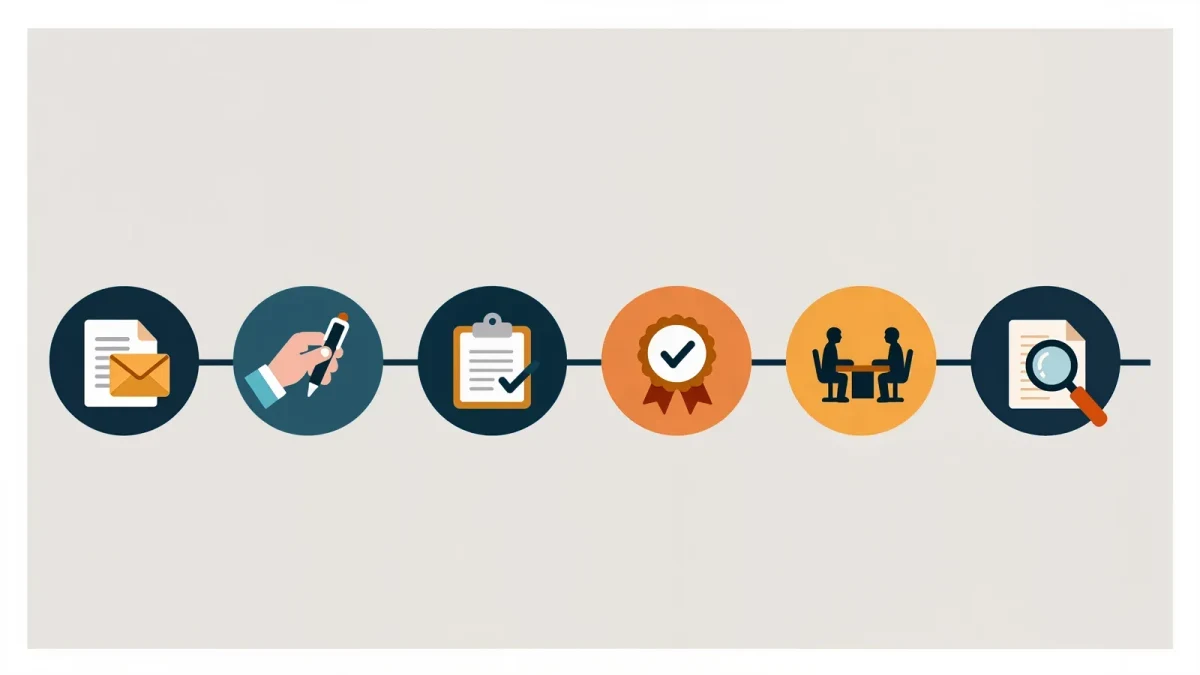
- Referral: a parent or teacher requests an evaluation in writing.
- Consent: the school explains the tests and the parent signs permission.
- Evaluation: district specialists assess the child across relevant domains.
- Eligibility meeting: the team decides whether IDEA criteria are met.
- IEP meeting: if eligible, goals, services, and placement are written within 30 days.
- Annual review and reevaluation every three years.
Who sits on the IEP team?
The team is bigger than many parents expect. By law it includes you, your child's general education teacher, a special education teacher, a district representative qualified to oversee services, and the specialist who interpreted the evaluation results. The school cannot finalize an IEP without inviting you, and interpreters are available on request. Your child may attend when appropriate, especially in high school when transition planning becomes mandatory by age 16.
What actually goes in the document?
The IEP is not a summary of wishes; each part has a legal function. Present levels of performance describe where your child is now, in measurable terms. Annual goals state what progress should look like in a year, also in measurable terms. Specially designed instruction lists what the school will actually do differently. Related services cover supports such as speech therapy, occupational therapy, or counseling. Accommodations change how your child accesses instruction — extended time, quiet testing — without changing what is taught.
| Element | What it does | What to check |
|---|---|---|
| Present levels | Baseline description of current skills | Uses data, not vague adjectives |
| Annual goals | Measurable targets for one year | Numbers attached, progress reportable |
| Services | Frequency and duration of instruction and therapy | Minutes per week stated explicitly |
| Accommodations | Access changes without altered standards | Matches how your child actually works |
| Placement | Where services happen, least restrictive first | Removal from general education justified |
What does "least restrictive environment" mean?
IDEA presumes that a child with a disability is educated alongside nondisabled peers to the maximum extent appropriate. The team has to justify any pull-out, not the reverse. Most students with IEPs spend the majority of the day in general education classrooms. If the school proposes a separate setting, ask what supports were tried in the general classroom first.
How should you prepare for the meeting?
Preparation beats volume. Read the draft IEP several days before the meeting if the school shares one, which is common practice though not a federal requirement. Bring a one-page summary of your child's strengths and struggles at home, recent work samples, and any outside evaluations. Invite a friend or advocate — you may bring anyone with knowledge about your child. During the meeting, ask for goals to be restated in plain numbers, and ask how progress will be reported and how often. You do not have to sign anything at the table.
What can you do if you disagree with the IEP?
Disagreement has a formal path. You can request another meeting, ask for an independent educational evaluation at public expense if you dispute the district's evaluation, pursue mediation, or file a due process complaint that leads to a hearing before an impartial officer. State parent training centers, funded under IDEA, offer free help with all of these steps. Disputes rarely start at hearings; most are resolved in earlier, calmer stages.
How often is the IEP reviewed?
At least once a year, and a reevaluation happens at least every three years to confirm the child still qualifies. You can request a review sooner if something is not working, in writing. Progress reports on the goals must come at least as often as report cards, which makes those reports the main early-warning system for parents between meetings.
What happens if you move or change schools?
IEPs travel with the child, which is one of the most practical protections in the document. If you move within the same state, the new district must implement the existing IEP immediately while it reviews the file; comparable services must start without waiting for a fresh eligibility decision. Moving across state lines is different: the new state must evaluate your child under its own rules, though it can adopt the existing IEP while that review proceeds. The practical advice is the same in both cases — request copies of the complete file before you withdraw your child, submit them to the new school in person if possible, and request an IEP meeting within the first weeks of enrollment rather than waiting for the school to schedule one.
Private schools sit outside most of this framework. IDEA's services for private-school students are limited to a proportionate share of federal funds, decided by the district's plan, and private schools are not obligated to implement an IEP. If you are weighing a private placement, ask specifically which accommodations the school provides and get the answer in writing.
What are the most common mistakes parents make?
Three recur in advocates' accounts. Accepting vague goals: a target like "will improve reading" cannot fail, which means it cannot be enforced; insist on numbers. Skipping progress reports: the quarterly updates are the only routine evidence of whether the plan is working, and reading them closely gives you standing to request changes midyear. Treating the relationship as adversarial by default: most IEP teams function better when parents arrive with specific, documented concerns and a collaborative tone, and the formal dispute options exist for the cases where that genuinely fails — not as an opening move.
What changes in high school?
By age 16, the IEP must include transition planning: measurable postsecondary goals tied to training, education, employment, and where relevant independent living. This is the section that connects the document to life after graduation, and it deserves as much parental attention as the academic goals do.