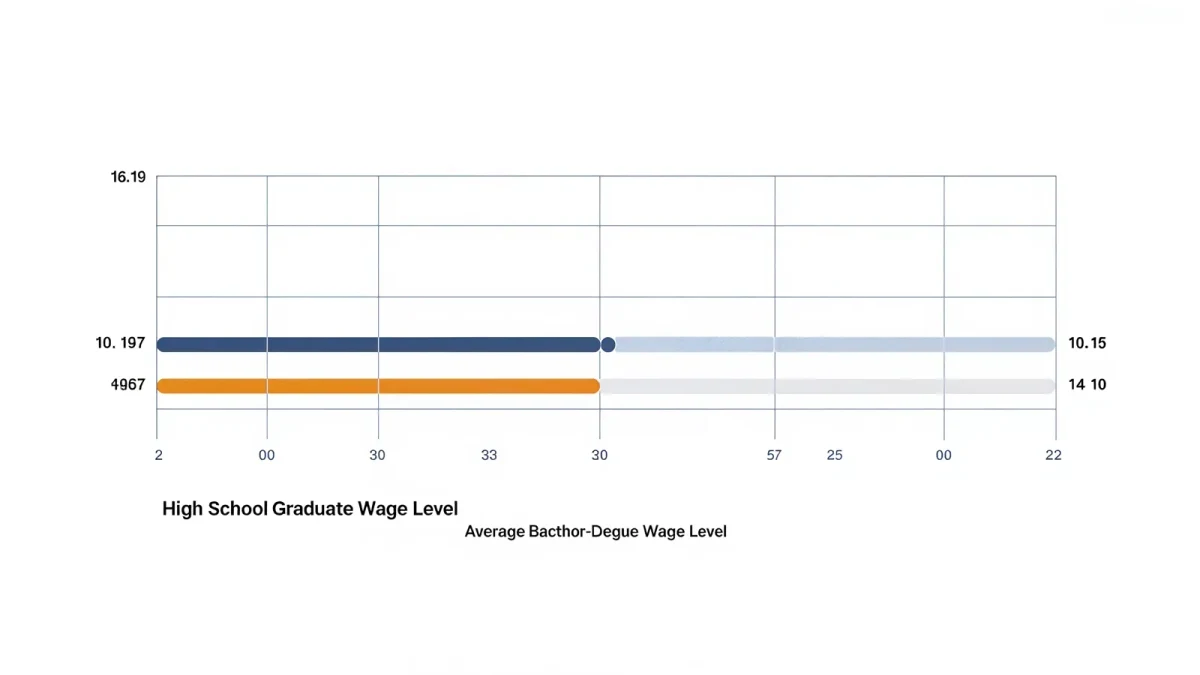
The U.S. Department of Education issued a proposed rule on April 17, 2026, that ties federal aid eligibility to what graduates actually earn, with undergraduate programs losing loan access if the typical graduate does not out-earn a high school graduate. The framework applies to all institutions regardless of tax status or sector, per the department's announcement.
The notice is the final of three proposed rules implementing the Working Families Tax Cuts Act, and it converts the accountability framework negotiated by the AHEAD rulemaking committee into regulatory text.
What are the earnings tests?
Undergraduate programs would fail if median graduate earnings do not exceed the earnings of a typical high school graduate. Graduate programs face a higher bar: earnings above those of an average bachelor's degree holder. Failing programs lose federal student loans and, in certain cases, Pell Grants.
The department framed the stakes around its loan portfolio of nearly $1.7 trillion and the goal of directing aid only toward programs that deliver economic value.
How did the rule get here?
The timeline moved quickly by regulatory standards. The department announced negotiated rulemaking on July 25, 2025; the AHEAD committee concluded its second session on January 9, 2026, reaching full consensus on the draft regulations; and the proposed rule followed on April 17, 2026.
What happens next?
Comments were due on or before May 20, 2026, through regulations.gov only. The department may revise the rule in response, and a final rule would set the effective timeline for institutions.
Program-level earnings data now become the central planning document for deans and provosts. Institutions with thin-margin master's programs, in particular, will need to model median wages against the bachelor's-degree benchmark before setting enrollment targets for 2027.
Which programs are most exposed?
Analyses of College Scorecard wage data suggest the risk concentrates in a few categories: master's degrees in fine arts, counseling, and some education specialities, plus undergraduate certificates in low-wage service fields. Programs serving older students who keep existing jobs while studying can also look weaker on raw earnings measures even when gains are real.
The proposed rule's two-of-three-years structure gives programs a cushion against single bad cohorts, but it also means institutions must track performance continuously rather than at review time.
What did negotiators and commenters flag?
During the January session, negotiators debated how to treat programs whose graduates serve high-need communities at modest pay. The consensus language kept uniform thresholds rather than adding public-service adjustments, a decision commenters revisited during the spring window.
Consumer groups generally welcomed the all-sector scope, while association representatives warned that earnings measures punish institutions by region and mission. The department's response to those comments will shape the final rule.
What should institutions do now?
Institutional research teams can already match Scorecard program-level earnings against the proposed benchmarks to build an internal watch list, and finance officers can stress-test tuition discounting under the caps that accompany the framework.