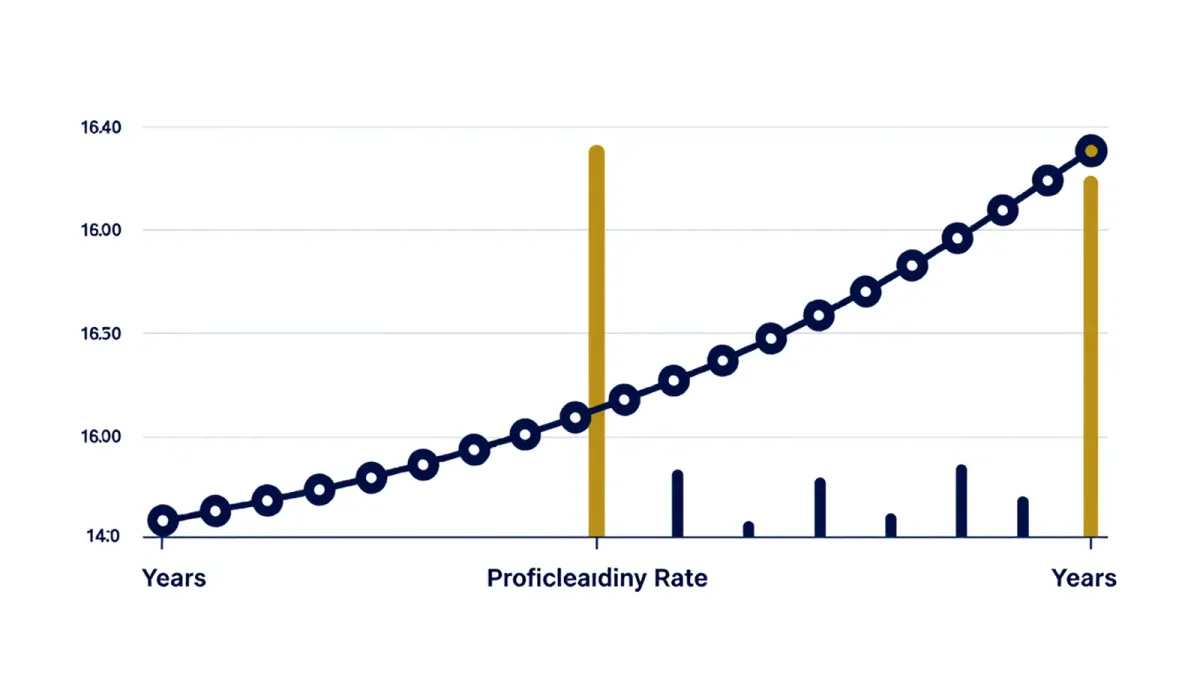
Mississippi's fourth-grade reading scores on the National Assessment of Educational Progress rose substantially between the mid-2010s and early 2020s, a shift widely studied and often called the "Mississippi Miracle," that researchers have traced in significant part to a statewide literacy policy requiring evidence-aligned, phonics-based early-reading instruction, coaching support for teachers implementing it, and a third-grade reading gate tied to demonstrated proficiency. The National Council on Teacher Quality's ongoing review of teacher-preparation programs has separately documented that many educator-preparation programs, prior to recent reform pushes, did not adequately train new teachers in the evidence base behind that approach, often called the science of reading, which is part of why several states moved toward mandating it rather than leaving the choice entirely to individual districts and teacher-preparation programs.
This is a framework for the tradeoff a state legislature or state board of education faces in that decision, not a recommendation on any specific state's policy path, which depends on the state's starting point and existing local-control traditions.
What Does the Case for Statewide Standardization Actually Rest On?
The argument for a statewide mandate rests on the pattern Mississippi's results are frequently cited to illustrate: reading instruction quality varied enormously by district and even by individual teacher preparation before the state intervened, and that variation itself was a driver of achievement gaps, since a student's reading outcomes depended heavily on which teacher-preparation program trained their teacher and which curriculum their specific district happened to adopt. A state mandate, paired with the coaching and gate-based accountability Mississippi implemented alongside the curriculum requirement, addresses that variation directly in a way that leaving the choice to individual districts, some far better resourced than others to evaluate curriculum quality independently, does not.
What Is the Case for Local Choice?
Local-control advocates generally argue that a single statewide mandate applied uniformly can fail to account for genuine differences across districts — student population, existing teacher expertise, and prior investment in a curriculum already showing strong local results — and that a top-down mandate risks becoming a compliance exercise rather than genuine instructional change if the state does not also fund and deliver the coaching and professional-development support that made Mississippi's implementation work, rather than the curriculum mandate in isolation. Mississippi's own results are frequently cited as showing that the coaching and support infrastructure, not the mandate alone, did much of the work, which is a caution against a mandate implemented without comparable investment.
What Does the Evidence Say About What Actually Drove Mississippi's Results?
Researchers examining Mississippi's literacy policy have generally pointed to several elements working together rather than any single lever: statewide adoption of evidence-aligned curricula and instructional materials; a coaching model providing sustained, in-classroom support to teachers implementing the new approach, not a one-time training; and a third-grade reading gate creating clear accountability, alongside targeted intervention funding for students not yet proficient. States that have adopted the curriculum-mandate element without the coaching investment have generally reported more uneven implementation and results, according to comparative state-policy analyses, than states that funded the fuller model.
How Should a State Weigh Which Elements to Mandate Versus Fund Rather Than Require?
A state weighing this decision should separate what genuinely requires statewide uniformity — teacher-preparation program alignment to the evidence base, since a district cannot fix what an educator arrives already undertrained in — from what can be funded and strongly incentivized without a rigid mandate, such as curriculum selection within an approved, evidence-vetted list rather than a single required curriculum, which preserves some local flexibility while still constraining choice to materials with demonstrated alignment to the research.
What Should a State Track to Know Whether Its Policy Is Working?
Whichever balance a state strikes between mandate and local choice, the tracking metrics that actually test the policy's effect are third-grade reading proficiency rates disaggregated by district and student subgroup, and teacher-preparation program outcomes specifically, not just statewide averages, since a statewide average can mask a policy that is working well in well-resourced districts and failing in under-resourced ones that received the mandate without the coaching investment that made the difference elsewhere.