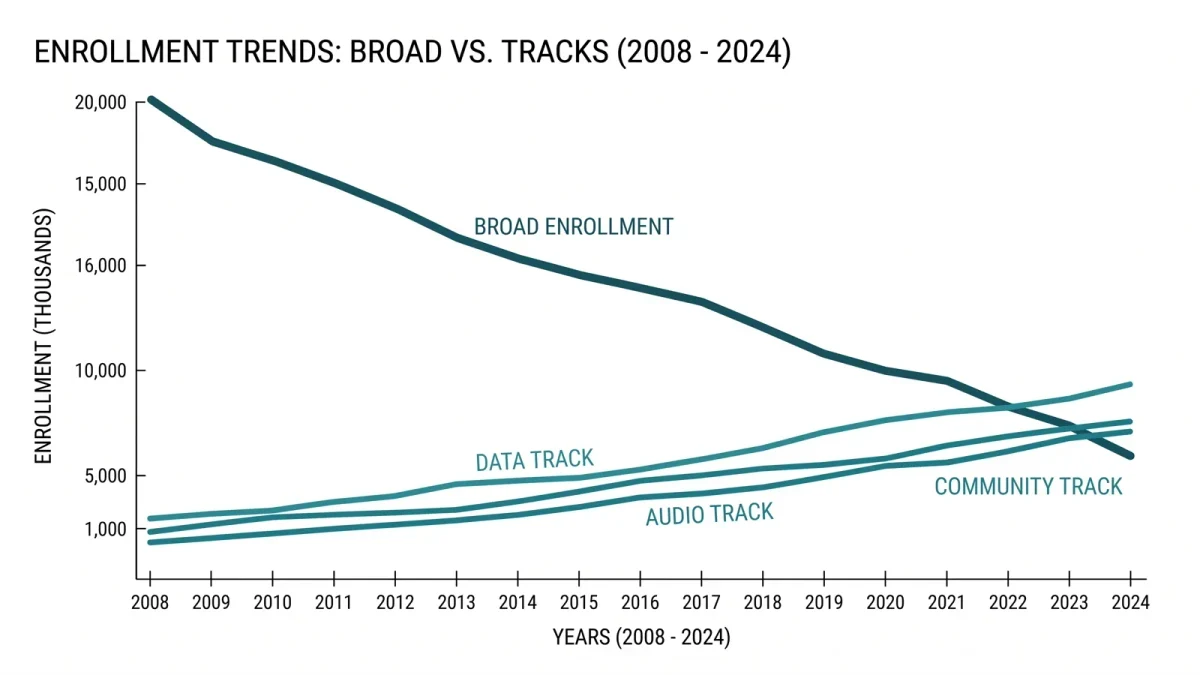
Dual enrollment lets a high school student take actual college courses and earn transcripted college credit, and well over a million U.S. high school students participate each year according to federal data from the National Center for Education Statistics. Programs are run through community colleges in most states, and eligibility rules, costs, and transfer outcomes vary by state and institution. Done carefully, the approach shortens time to a degree; done casually, it produces credits no college will accept.
What is dual enrollment, exactly?
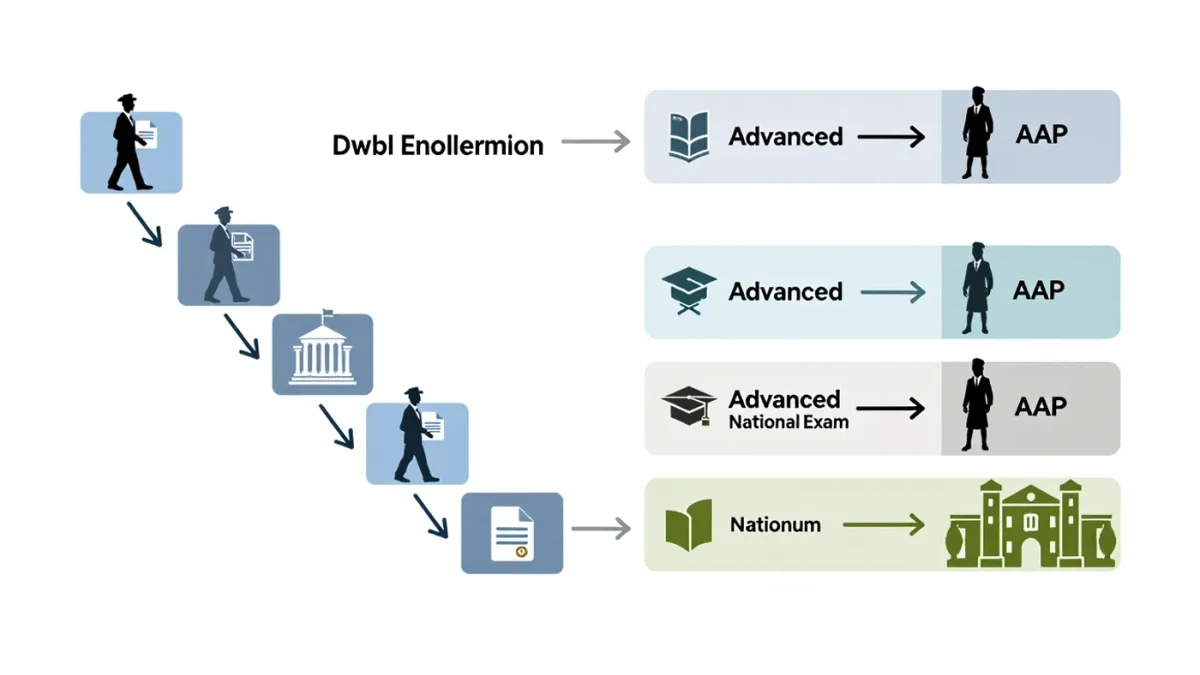
The defining feature is that the course is a real college course, with a college transcript attached to the student's name, taught either by a college instructor or by a high school teacher who qualifies as college faculty. That distinguishes it from Advanced Placement, where credit depends on a single standardized exam score in May, and from IB, which works through diploma-program scores. Dual enrollment credit exists the moment the student passes the course. The trade is that a weak grade becomes part of a permanent college record rather than just a high school one.
Who is eligible, and when can students start?
Common requirements include a minimum GPA (often 3.0), counselor or principal approval, placement test scores or prerequisites, and sometimes a minimum age or grade level — some states allow tenth graders, others start students in eleventh. Some states, including Florida and Ohio, run statewide programs with guaranteed funding and broad access; elsewhere availability depends on agreements between a specific district and a specific college. The school counselor is the first stop, because eligibility lives in program paperwork rather than in general law.
What does it cost?
Pricing structures vary sharply: some states subsidize dual enrollment fully, some discount tuition, and some leave families paying per-credit rates plus fees and textbooks. Even "free" programs can carry textbook and transportation costs. Compare the real out-of-pocket cost against the alternative of taking the same course at a community college after graduation, and against AP, which is free apart from the exam fee. One caution: a failed dual enrollment course has cost families real tuition in states without subsidies.
Will the credits actually transfer?
This is where casual participants lose their investment. Credit transfer is decided by the receiving institution, not the college that granted it. In-state public universities are the most predictable destination, and many states mandate that public colleges accept dual enrollment coursework. Private colleges and out-of-state publics evaluate course by course.
| Option | Credit depends on | Typical cost to family | Main risk |
|---|---|---|---|
| Dual enrollment | Passing the college course | Free to discounted in many states; full tuition in some | Permanent transcript; transfer refusal |
| Advanced Placement | One exam score, set by each college | Exam fee, often waived | All-or-nothing exam outcome |
| IB courses | Program scores and college policy | Program-based | Higher entry barriers |
Which courses transfer most reliably?
General-education courses with obvious equivalents — college algebra, English composition, introductory biology with lab, U.S. history, Spanish — transfer cleanly almost everywhere. Narrow, vocational, or remedial-level courses often do not, and credits below 100-level at community colleges frequently count for nothing at four-year institutions. Before enrolling, ask the target four-year colleges for their transfer credit policy or use the college's online equivalency tool. If a student's top-choice university refuses a course, a cheaper alternative is not cheap.
What is the enrollment process?
- Meet the school counselor in spring to map courses against graduation requirements.
- Apply for admission to the partner college as a dual-enrollment or non-degree student.
- Submit eligibility forms — GPA verification, approval signatures, placement evidence.
- Register during the college's window, which opens months before high school scheduling.
- Note drop deadlines in the college calendar; they arrive earlier and cost more than high school drops.
What are the risks worth weighing?
Three dominate. First, the permanent record: withdrawals and Ds follow the student to every future college application. Second, credit-transfer friction described above. Third, unintended consequences for college admissions and freshman status — some universities treat students with many credits as transfers, which changes housing priority, scholarship eligibility, and application pools. There is also an equity finding parents should know: national research, including work from the Community College Research Center at Columbia University, shows access to dual enrollment skews toward higher-income students even where programs are free, and grades vary by student preparation more than by program quality.
How does dual enrollment affect the high school day?
Logistics determine whether the program works for a given student. Courses taught on the high school campus — often labeled concurrent enrollment — fit into the normal bell schedule and cause the least disruption. Courses requiring travel to the college campus eat two or more periods once commuting is counted, and online college courses demand more self-regulation than most ninth through eleventh graders have practiced. Before enrolling, map an actual weekly schedule including travel, and check what happens to the courses your child drops to make room; a college class that displaces a graduation requirement needs an explicit plan for satisfying that requirement later.
Calendar mismatches are the classic surprise. The college semester starts in August, weeks before the high school year, ends on its own schedule, and observes different holidays. Families managing one calendar often miss the other's deadlines — particularly the drop date, which at most colleges falls within the first two weeks and determines whether a withdrawal appears on the transcript.
What support exists for struggling dual enrollment students?
College courses come with college-level support rather than high-school-style monitoring. Instructors do not notify parents — federal privacy law, FERPA, treats the student as the responsible party once enrolled, regardless of age — and parents generally cannot access grades without the student's written consent. On the college side, tutoring centers, writing labs, and office hours are genuinely available and underused by dual enrollment students. The students who struggle most are those who expected the high school scaffold of reminders and grade recovery; setting a weekly check-in routine at home replaces some of that scaffold, and choosing the first course in a strong subject rather than a weak one replaces the rest.
How many courses should a student take?
One college course per term alongside a full high school schedule is the standard, defensible load; ambitious students with strong grades handle two. Replacing the entire senior year with college coursework — full-time dual enrollment — works for some students but removes the support structure and the graduation rituals of high school. A useful rule: the student should have demonstrated A/B performance in the corresponding high school subject before adding the college version.
Does dual enrollment improve outcomes?
Studies generally find positive associations with college enrollment and completion, but researchers caution that participants are a self-selected, stronger-prepared group, and randomized evidence is limited. The honest framing: dual enrollment reliably saves time and money for students already bound for college, particularly at in-state publics. It is a cost-reduction tool more than an outcome-changing one, and that framing should drive course selection toward requirements the student would otherwise take anyway.