The Consortium for School Networking's annual State of EdTech Leadership survey has consistently ranked funding for hardware refresh cycles among the top budget challenges technology directors report, a finding that reflects a structural problem: most districts adopted 1:1 device programs in a single wave, which means the fleet ages in a single wave too, creating a large, lumpy capital cost that recurs every three to five years rather than a smooth annual expense.
This is a framework for timing that replacement decision, not a recommendation on any specific device or vendor. Every district's budget cycle, warranty terms, and instructional use differ.
What Actually Determines When a Device Fleet Needs Replacing?
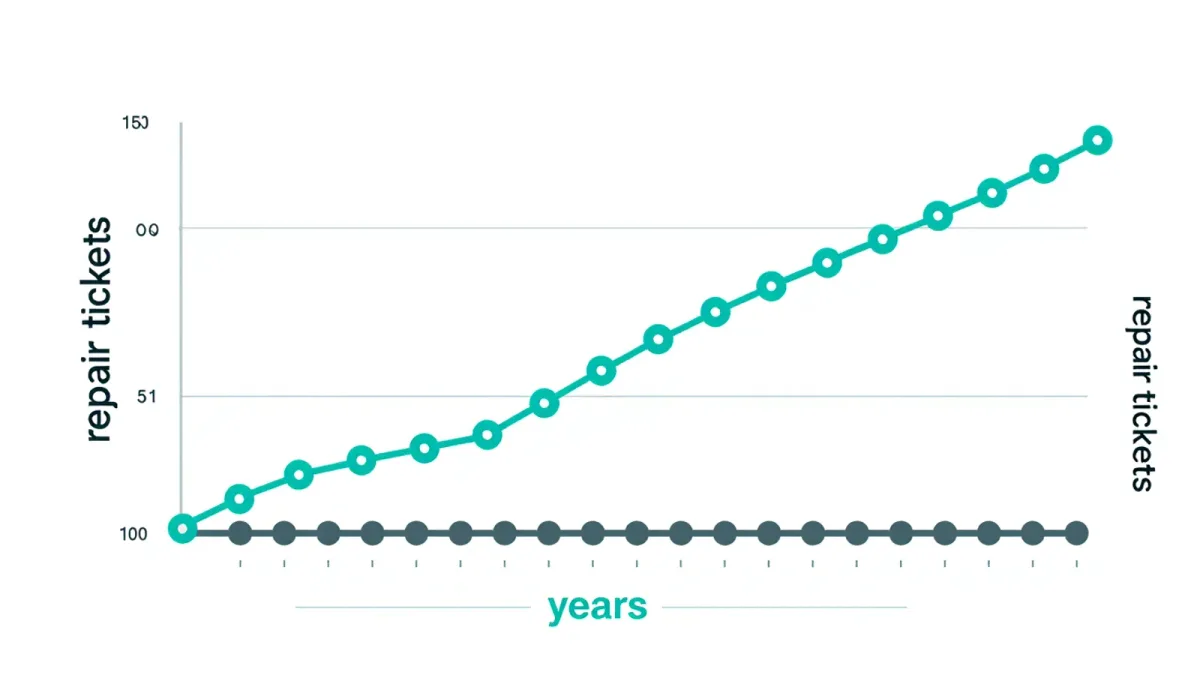
Three factors matter more than a device's calendar age: battery degradation, which is usually the first hardware failure mode and the one that most directly disrupts a school day when a device cannot make it through class; manufacturer software support, since an operating system that stops receiving security updates creates a compliance and safety problem regardless of whether the hardware still runs; and repair cost trend, tracked by device cohort rather than fleet-wide, since a specific purchase year often shows a repair-cost curve that turns sharply upward once it crosses a threshold, a signal that is easy to miss without cohort-level tracking.
Technology directors who track only calendar age tend to either replace working devices too early, wasting budget that could fund other needs, or ride a failing cohort too long, absorbing rising repair costs and classroom disruption that a scheduled replacement would have avoided.
How Should a District Build the Replacement Budget Case?
The strongest budget case for a school board pairs total cost of ownership with instructional-time cost: total cost of ownership sums the purchase price, extended warranty or insurance, repair costs by cohort, and staff time spent managing an aging fleet's support tickets; instructional-time cost translates device downtime into lost class time, using help-desk ticket data the district likely already collects but rarely presents this way. A board weighing a refresh purchase against other budget priorities responds more directly to "this cohort now generates three times the support tickets of a new device" than to a generic request for hardware funds.
Should Districts Refresh the Whole Fleet at Once or Stagger It?
A single-wave refresh, replacing an entire grade band or building's fleet in one purchase cycle, simplifies logistics and often secures better per-unit pricing, but recreates the same lumpy multi-year capital spike that caused the current budget pressure. A staggered refresh, replacing roughly a fifth of the fleet each year on a five-year rotation, smooths the annual budget line and reduces the risk of a single bad purchase year affecting the entire fleet at once, at the cost of more complex device management across multiple hardware generations simultaneously.
Districts with mature technology departments increasingly favor staggered refresh specifically because it converts an unpredictable capital emergency into a predictable annual line item that a board can plan around.
What Role Should Extended Warranties and Insurance Play?
An extended warranty or device-insurance program shifts unpredictable repair cost into a predictable annual premium, which can make budget planning easier even when the total cost is similar or slightly higher than paying for repairs as they occur. The tradeoff is worth running as an explicit total-cost comparison against the district's own historical repair-cost data by device cohort, rather than assumed, since the value of the coverage depends heavily on how hard a specific student population is on hardware.
What Should Trigger an Early Replacement Outside the Normal Cycle?
A software support end-of-life date announced by the manufacturer is the clearest trigger for early replacement regardless of where a cohort sits in its planned cycle, since running unsupported software creates a security exposure a district cannot fully mitigate through other means. A sharp, sustained rise in repair tickets for a specific cohort, confirmed against the cohort-tracking data rather than anecdote from a single school, is the second legitimate trigger for moving a refresh earlier than planned.